
- Developing
BGC Launches Betting-Shop Campaign as UK Gambling Tax Debate Intensifies
The Betting and Gaming Council launched its 'Back Our Betting Shops' campaign on 28 September as speculation over further UK gambling tax changes intensifies ahead of the Autumn Budget. The campaign focuses on betting-shop jobs and local high-street businesses, while the BGC cites modelling that a 40% Machine Games Duty rate could put up to 16,000 jobs and nearly 1,500 betting shops at risk. Those closure figures are modelling cited by the trade body, not an official government forecast.

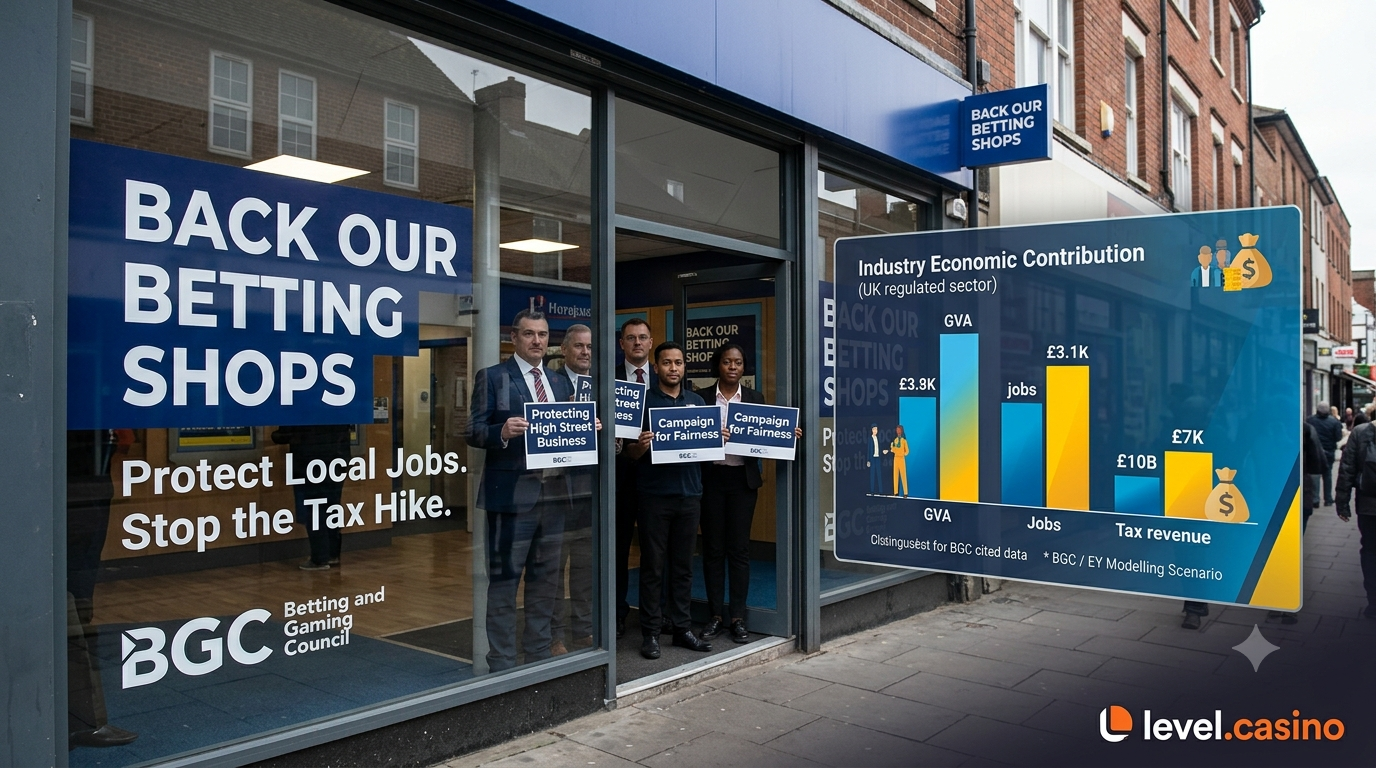
The Betting and Gaming Council has launched a campaign aimed at highlighting the jobs and high-street role of Britain's betting shops as debate over possible gambling tax increases intensifies ahead of the Autumn Budget.
BGC launches Back Our Betting Shops

The trade body launched its 'Back Our Betting Shops' campaign on 28 September 2026. The campaign is built around stories from betting shops and the people who work in them, with the BGC describing the venues as local businesses and community hubs.
BGC chief executive Grainne Hurst said the campaign is intended to put the people, jobs and communities behind the statistics in the public debate.
What the campaign is arguing
The BGC says more than 36,000 people work in betting shops across Britain. It also says the wider regulated betting and gaming sector supports 109,000 jobs, contributes £6.8 billion in gross value added and generates more than £4 billion a year in tax revenue for the Exchequer.
Those figures are industry-provided economic contribution figures and should not be treated as an independent government estimate.
The 40% MGD modelling
The campaign comes after sustained debate about Machine Games Duty. On 21 September, the BGC published a response citing EY modelling that a rise in MGD to 40% could put up to 16,000 jobs and nearly 1,500 betting shops at risk, alongside as many as 34 casinos. The BGC said the modelling also indicated the Treasury could be £124 million worse off.
The figures are scenario estimates. They describe the potential effects of a 40% rate and do not establish that the government will introduce that rate or that the modelled closures will occur.
What is actually decided
As of 28 September, no 40% MGD rate had been enacted. Contemporaneous reporting described the proposed increase as a matter under discussion ahead of the Budget. The BGC's campaign is therefore a lobbying and communications response to a possible tax change, not a response to a confirmed new tax rate.
Why the debate matters for betting shops
The BGC has linked betting-shop taxation to employment, high-street occupancy and funding for British racing. Those are positions advanced by the trade body and should be distinguished from an official assessment of future tax policy.
The immediate news is the campaign launch. The policy outcome remains unresolved and will depend on the government's Budget decisions and any subsequent legislative changes.
Reporting & Methodology
Campaign details are cross-checked through contemporaneous Racing Post reporting and BGC's own published MGD material. Tax-policy claims are explicitly attributed because no final Budget decision had been made as of 28 September.