AI Casino Hosts Are Moving Into the Mainstream: What It Means for Online Gambling in 2026
AI casino hosts are emerging in 2026, using player data and personalized conversations to reshape VIP engagement, customer service and online gambling technology.

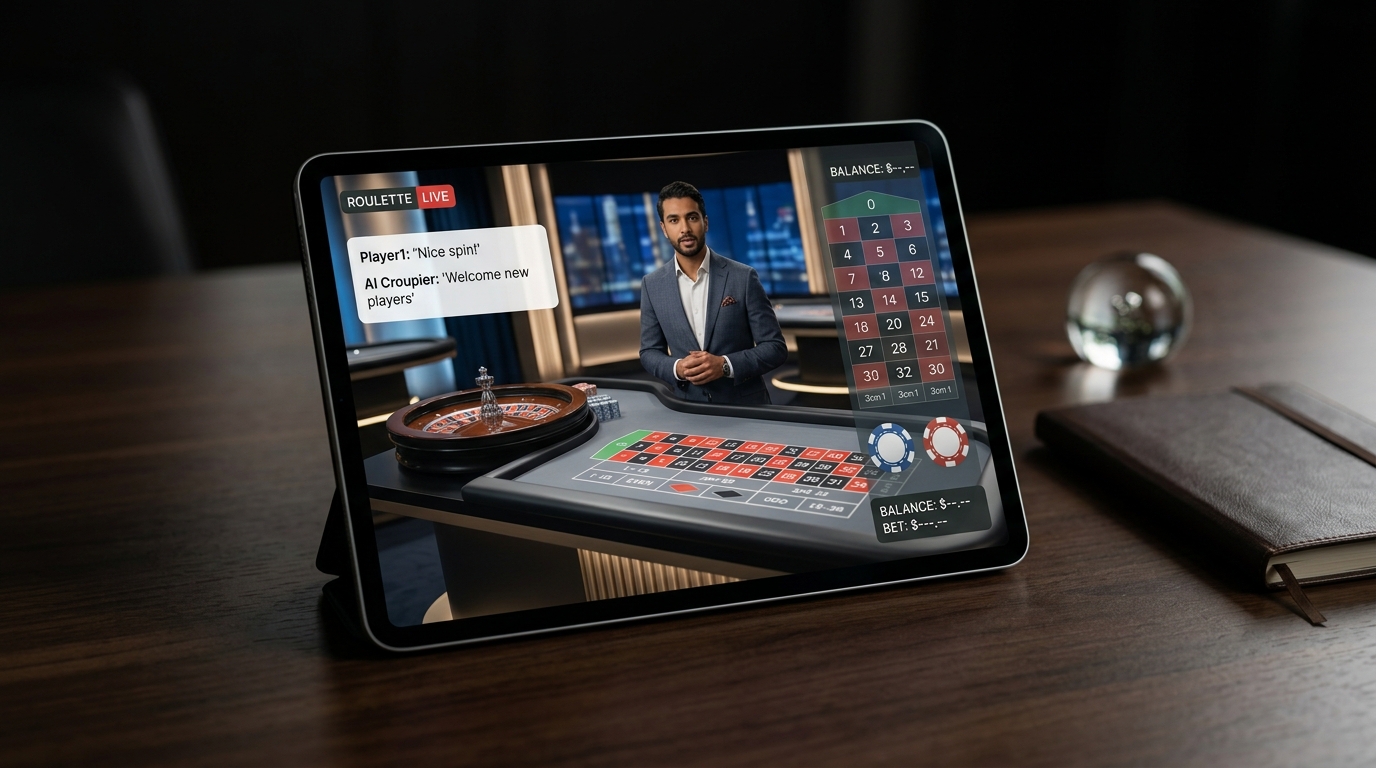
For most of 2026, "AI casino host" has been more of a pitch than a product category. That changed this year. A handful of companies have moved from slideware to shipping software, and casino operators are now testing systems that talk to players, run virtual roulette wheels, and flag high-value guests without a human touching the keyboard. Whether that adds up to a mainstream shift, or an early and uneven experiment, depends on which part of the industry you're looking at.
What Is an AI Casino Host?

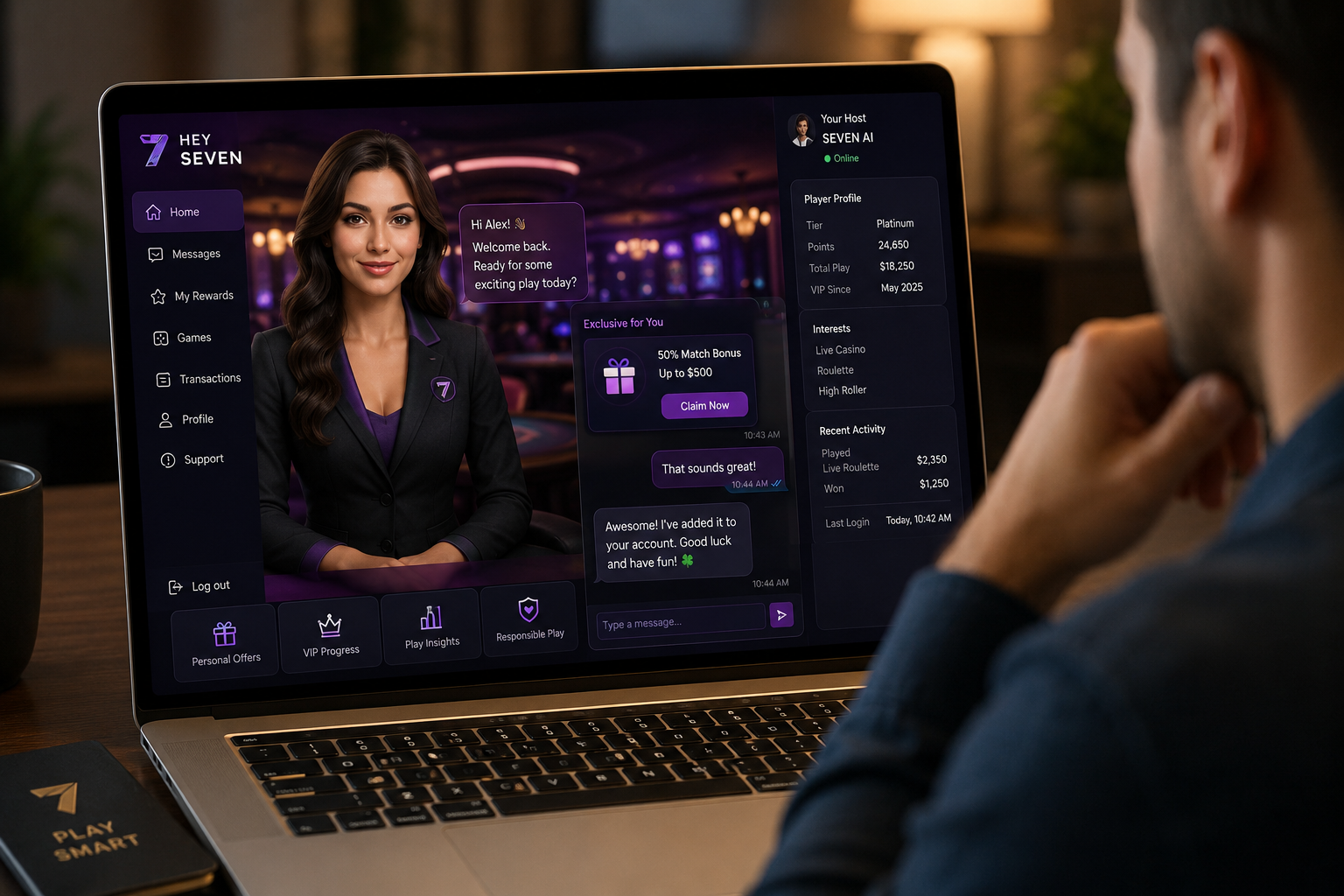
An AI casino host is software designed to do what a human player-development manager does: build a relationship with a player, understand their preferences, and decide when and how to reach out with an offer. That's different from a chatbot, which typically answers a narrow set of support questions and has no persistent memory of who it's talking to. It's also different from an AI live dealer, which presents a game rather than managing a relationship. Las Vegas-based Hey Seven, which launched on July 7, 2026, is the clearest example so far. The company describes its platform as combining gaming data, behavioral signals and real-time conversation into what it calls a single player profile, and says the system is built to operate autonomously rather than simply feeding suggestions to a human host.
Why AI Casino Hosts Are Getting Attention in 2026
The interest isn't abstract. According to The State of AI in Gaming 2026, a benchmarking report released on April 9, 2026 by UNLV's International Gaming Institute and KPMG, more than 80% of gambling companies surveyed have already adopted generative AI for tasks like content creation and analysis. But the report also found that far fewer companies have moved into "agentic AI" — systems that can independently plan, decide and act, which is exactly what an autonomous AI host claims to do. That gap between widespread interest in AI generally and caution around autonomous AI specifically is the backdrop against which Hey Seven, and companies building AI dealers, are launching.
From Human Hosts to AI-Assisted Player Development
Hey Seven was founded by former casino marketing executives, including co-founder and Chief Commercial and Revenue Officer Mikhail Gaushkin, previously of MGM Resorts International, Caesars Entertainment and Seminole Gaming. The company says its "Seven Agents" handle tasks like identifying emerging VIPs, recommending incentives and monitoring conversations for responsible-gambling signals, while human hosts are left to handle what Gaushkin has described as "the moments only people can create." On July 21, 2026, Hey Seven disclosed that venture firm Bettor Capital was its seed investor and said its platform is now being deployed with gaming operators — though the company has not named specific operator customers, and no independent performance data is publicly available to verify claims about player engagement or revenue lift.
How AI Is Changing Casino Personalization
The pitch behind platforms like Hey Seven is scale. A human host can maintain a limited number of close relationships; software, in principle, can track thousands of players simultaneously, in any language, without breaks. Hey Seven says its system captures "sentiment, preferences, intent and reactions" directly from player conversations, going beyond the passive tracking that loyalty and CRM systems have long done. Whether that produces the kind of personalization a player actually notices or values remains an open question — it's a company claim, not an independently measured outcome.
AI Casino Hosts vs Human Casino Hosts

Nobody credible in the industry is currently arguing that AI should replace human hosts outright. Human hosts remain better positioned to handle complaints, sensitive responsible-gambling escalations, and the kind of judgment calls that come from reading a person face to face. AI systems are better at availability, consistency, multilingual reach and processing large volumes of behavioral data quickly. The realistic model emerging in 2026 looks like AI plus human teams, with software handling scale and routine engagement while people handle the relationships and situations that require it.
AI Live Dealers Are Taking the Concept Further
While Hey Seven represents the "host" side of the equation, a separate wave of companies is building AI dealers — virtual croupiers that present a game rather than manage a VIP relationship. These efforts are further along in some respects, and it's worth being precise about who's doing what, since several companies use very similar branding.
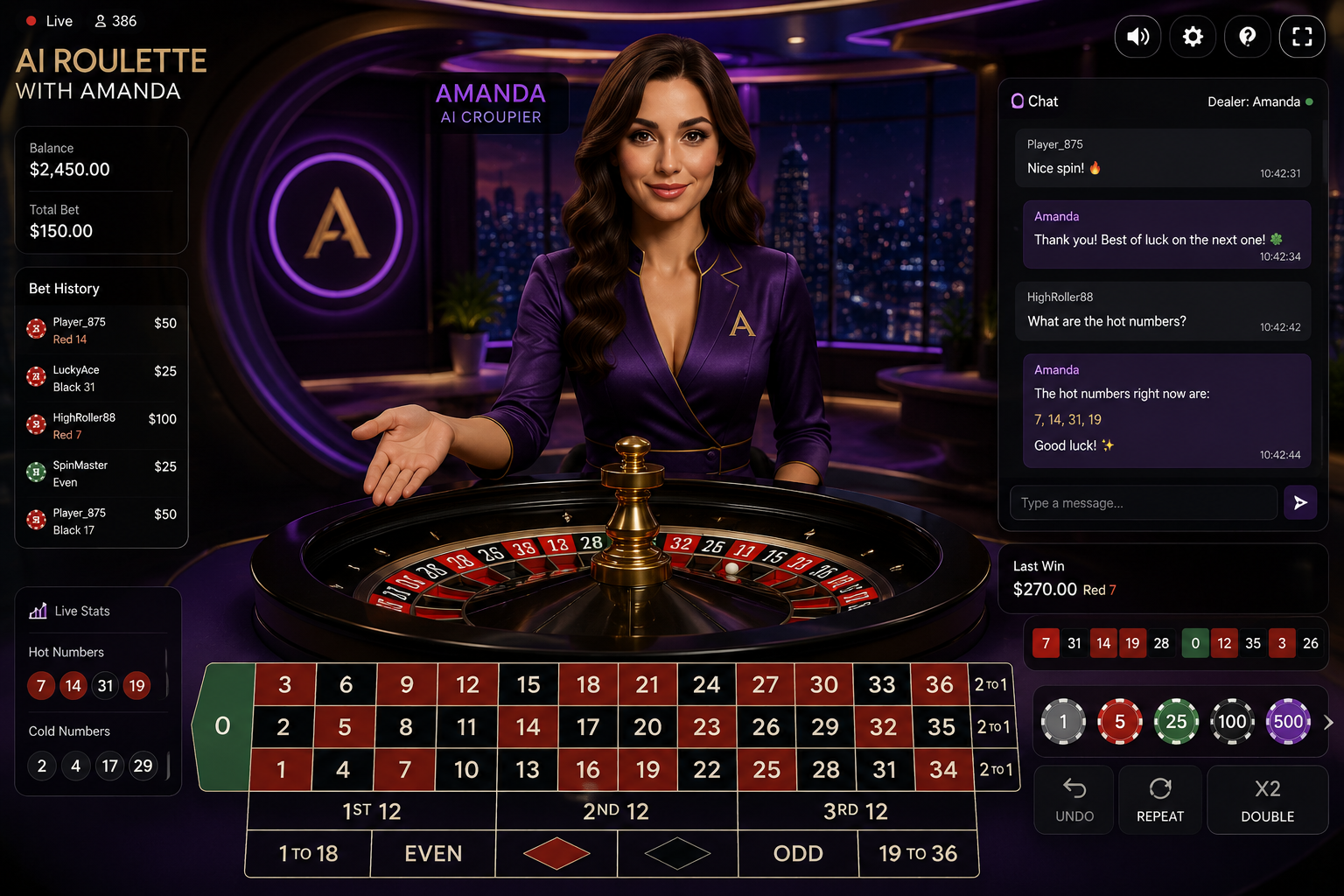
Sentient Gaming Group, a Stockholm-based provider, partnered with game aggregator QTech Games in a deal announced March 19, 2026. The result, "AI Roulette with Amanda," is a live European roulette game presented by an AI croupier that responds to player chat and betting activity, distributed exclusively through QTech to operators in emerging markets. Sentient's roster also includes dealer personas Chen, Nancy and Daphne; card games such as blackjack are still listed as coming soon, not currently available.
Separately — and this is a distinction worth getting right — Sentient Studios is a different company, spun out by BetHog, the crypto casino and sportsbook led by FanDuel co-founder Nigel Eccles. BetHog announced a $10 million Series A round on April 22, 2026 to launch Sentient Studios as a B2B platform licensing AI dealers to other operators. The product is built around Sunny, an AI blackjack dealer BetHog first introduced on its own site in October 2025 and now offers in 12 languages. Eccles has claimed Sunny is "10X more popular" than BetHog's human dealer equivalent, though that figure comes from the operator itself rather than an independent audit. In July 2026, Eccles announced BetHog would wind down its own consumer casino and sportsbook by July 31, 2026 to focus entirely on Sentient Studios — a strategic bet on B2B demand for AI dealers, not proof that AI dealers have won over players at scale.
A third project, from Playgon Games and animation studio Digital Nation Entertainment, is further from market. The two companies signed a definitive agreement on April 20, 2026, formalizing a memorandum of understanding from November 2025, to co-develop an AI dealer platform targeting a Q3 2026 commercial launch, subject to development milestones and regulatory approvals. As of this writing, that product has not launched. Playgon has reason to move carefully: the Nevada Gaming Control Board ordered the company to suspend its Las Vegas human live-dealer studio in July 2024 over licensing issues, pushing Playgon toward a B2B, software-first model.
What AI Casino Hosts Could Mean for Players
For players, the upside case is faster responses, availability outside normal support hours, and service in a player's own language without waiting for a human agent. The more speculative claim — that an AI can deliver "host-level attention" that feels personal — is unproven. There's also a meaningful difference between AI used for customer-service convenience and AI used to optimize how much a player engages or spends, and companies rarely draw that line clearly in their own marketing.
The Responsible Gambling Question
The UNLV/KPMG report is the most rigorous available evidence on how the industry is handling this, and it's not reassuring. Drawing on responses from 83 gambling companies and 113 regulators, the report found the sector's overall AI governance scored just 30 out of 100, the lowest of any category measured, and that only about one in five companies has a dedicated AI governance role. The report's authors framed this directly: many companies are moving faster on AI adoption than on the controls needed to manage it. That matters because the same behavioral data an AI host uses to personalize an offer could, in principle, be used to target a vulnerable player more effectively. Hey Seven says its system includes safeguards that gate communication against responsible-gambling signals, but there's no independent verification of how those safeguards perform in practice. Anyone concerned about their own play, or a family member's, can find guidance through responsible gambling resources.
Privacy, Transparency and Trust
AI player-development platforms are explicit about building detailed behavioral profiles, and that raises real questions about consent, transparency and how automated decisions about offers and incentives get made. Regulators have not yet settled a basic question: whether operators must disclose to a player that they're talking to an AI rather than a person. Until that's resolved, players engaging with a "host" that responds instantly, in any language, at any hour, may not always know what they're dealing with.
Will AI Replace Human Casino Hosts?
Not based on the evidence available now. What's happening instead is a division of labor: AI systems handling the volume of players a human team couldn't realistically reach, while human hosts retain the top-tier relationships and situations that require judgment. Sentient Studios' Nigel Eccles has predicted AI dealers could account for the majority of the live-dealer market within five years — a bold forecast from a company with an obvious commercial stake in it being true, and one independent data doesn't yet support.
What AI Casino Hosts Could Mean for the Future of Online Gambling
The direction of travel is toward more AI in both player development and live-dealer presentation — B2B partnerships like QTech's with Sentient Gaming Group and Playgon's with Digital Nation suggest operators want the option even if they're not fully committed yet. As that technology becomes part of the casino experience, independent evaluation of how it actually treats players becomes more important, not less. That's part of why casino review methodology increasingly has to account for how a platform's technology, not just its games and bonuses, affects the player experience. As an independent information source, about Level.casino and its editorial standards reflect that same principle: assess what's verifiable, and say clearly when something is still a claim rather than a fact.
Conclusion
Real products have launched in 2026 — Hey Seven's player-development platform, Sentient Gaming Group's AI Roulette with Amanda, and Sentient Studios' Sunny among them. Others, like Playgon's AI Dealer, remain targets rather than launches. What hasn't happened is proof that any of this has reached mainstream, verified adoption, or that AI has meaningfully replaced human casino hosts. The more defensible read of 2026 is that AI casino technology has gone from concept to early commercial product, with the industry's governance and regulatory clarity still trying to catch up. Readers who want to track where the future of online casinos is actually heading should watch operator adoption numbers, not just company launch announcements, over the next year.