Dutch Gambling Authority Warns After Lottery Licence Obtained Through Identity Fraud in Quick Boys' Name
The Dutch Gambling Authority revoked a lottery licence obtained in Quick Boys' name through identity fraud and warned consumers about eight websites.

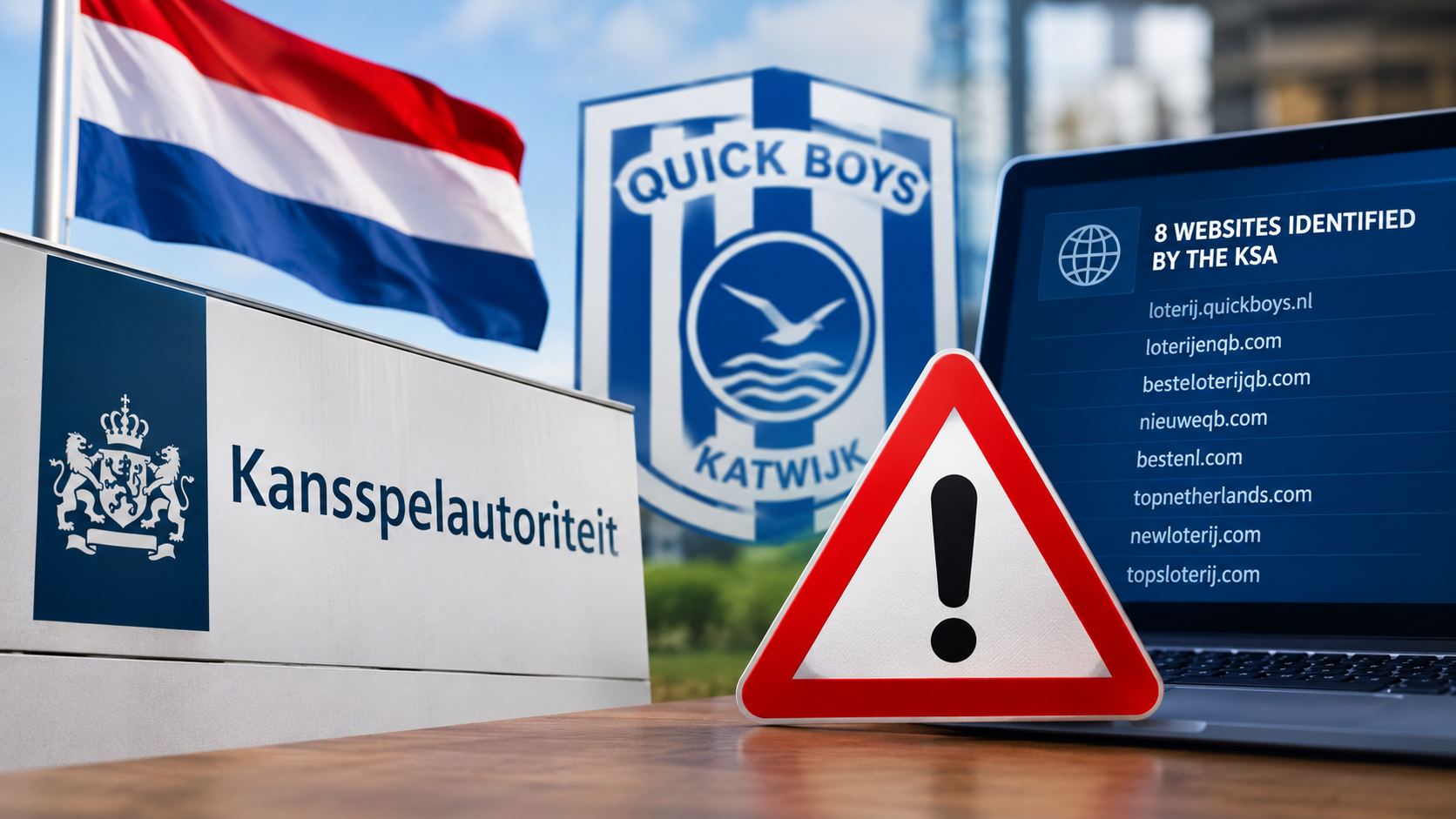
The Netherlands Gambling Authority (Kansspelautoriteit, Ksa) has revoked a lottery licence that was issued in the name of Dutch football club Quick Boys after an unknown person posed as the club's chairman during the application process.
How the licence was obtained

The Ksa said on 2 October 2026 that the licence was obtained through what it described as professional fraud. Quick Boys, based in Katwijk, did not apply for the lottery licence and, according to the regulator, has nothing to do with the websites on which the lottery was offered. The Ksa said the club was itself a victim of identity fraud.
According to the Ksa, an unknown party impersonated the chairman of Quick Boys when submitting the application. The person subsequently obtained a lottery licence in the club's name. The regulator has since revoked the licence.
The Ksa has not disclosed the licence number, the precise lottery licence category, the application or grant date, or the date on which the licence was revoked. The circumstances that led to the fraud being discovered have also not been detailed.
Eight websites named by the Ksa
The regulator said the licence was used to establish websites offering lottery tickets. It identified eight domains:
- loterij.quickboys.nl
- loterijenqb.com
- besteloterijqb.com
- nieuweqb.com
- bestenl.com
- topnetherlands.com
- newloterij.com
- topsloterij.com
The Ksa explicitly stated that these websites are not owned by Quick Boys. Their current operational status has not been independently verified, and the regulator has not disclosed whether all eight were active at the same time.
The Ksa has also not disclosed how many people may have purchased tickets, how much money may have been paid, or whether personal information was actually collected or misused.
Consumer warning
The Ksa advised consumers not to enter personal information on the identified websites, including names, addresses, email addresses, telephone numbers or bank details.
The regulator said it does not know what the person behind the websites may do with information submitted to them and warned that such data could potentially be misused for phishing or identity fraud. The Ksa has not said that personal data was definitely stolen.
Consumers who bought a lottery ticket through the affected websites are advised by the Ksa to contact their bank about reversing the payment, report the matter to the police, notify the Fraudehelpdesk and report the matter to the Ksa. Anyone who entered personal information is advised to be alert to unexpected emails, text messages or telephone calls requesting information or payments.
The Ksa also recommends checking unfamiliar lottery offers through its Kansspelwijzer and contacting the relevant association directly where there is doubt.
Ksa says the case reflects a broader risk
The Quick Boys case is not being presented by the Ksa as an isolated incident. The regulator said it has seen increasing attempts to misuse the names and licences of associations that organise legal lotteries.
The Ksa described this as a new supervisory risk. It said that in another case, a comparable attempt was stopped through additional checks. The regulator has also tightened checks on the identities of licence applicants and on domain names entered into the Kansspelwijzer.
Ella Seijsener, the Ksa's director of licensing, said consumers should be able to trust a Ksa licence and that the regulator had taken the incident seriously.
Quick Boys' involvement
The Ksa said Quick Boys did not apply for the lottery licence and that the club was the victim of identity fraud. The regulator also said the club has nothing to do with the websites named in its warning.
No separate public statement from Quick Boys was located during the research for this report.
What remains unknown
The Ksa has not disclosed the identity of the person who allegedly impersonated the Quick Boys chairman. It has also not published the licence number, the precise licence category, the dates of the application and grant, the date of revocation, the number of potentially affected consumers or any estimated financial losses.
The regulator said it has reported the matter to police and will not comment further on the investigation.
For consumers, the immediate message from the regulator is to avoid submitting personal or banking information to the identified websites and to verify lottery licences through the Ksa's official Kansspelwijzer before participating. The case also highlights the importance of verifying the identity of licence applicants and the domains associated with regulated gambling activity.
Reporting & Methodology
Level.Casino independently prepared this report using the official Kansspelautoriteit warning and official regulatory information. The report attributes allegations and factual claims about the incident to the Ksa and does not present unverified information about the identity of the person involved, affected consumers, financial losses or the current status of the named domains as established fact.
More from Regulation
- Brazil: Lula Re-Elected as Congress Considers Fixed-Odds Betting Ban
- UK Budget Preview: Gambling Duties and the Machine Games Duty Debate Before 28 October
- Ohio Orders 10 Prediction-Market Platforms to Stop Offering Sports Contracts
- AGCO Fines theScore.Bet C$200,000 Over Cash-Out Offers It Did Not Honour