Entain Drops Out of the FTSE 100 as Its Turnaround Faces an Investor Test
Entain will leave the FTSE 100 for the FTSE 250 from 21 September, a valuation-driven shift that puts its turnaround strategy under fresh investor scrutiny.

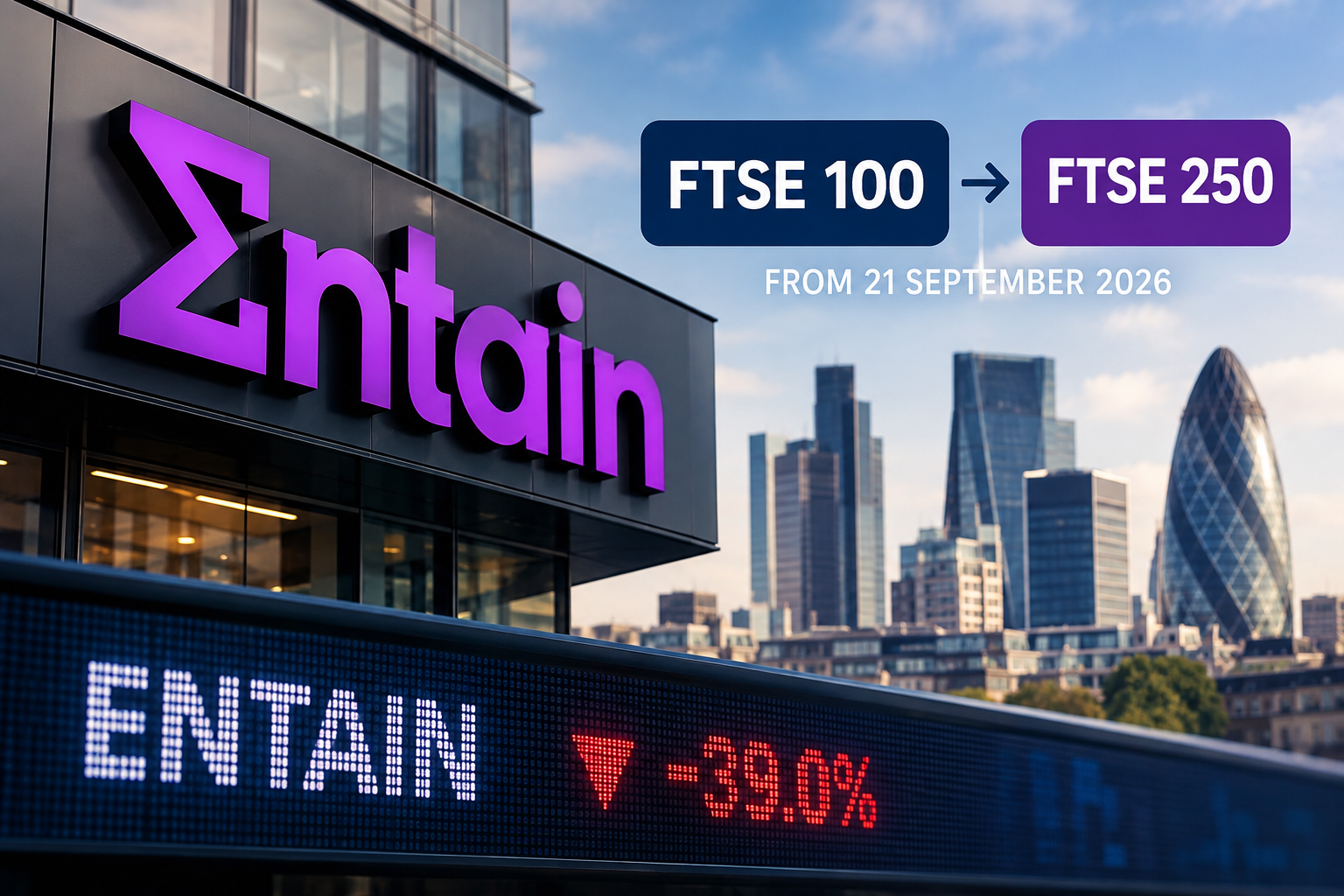
Entain will leave the FTSE 100 and move to the FTSE 250 after a sharp decline in the group's market valuation over the past year. From 21 September 2026, the gambling group will become an FTSE 250 constituent after FTSE Russell confirmed the change in its September quarterly review.
The reshuffle, announced on 2 September, will see easyJet and Ithaca Energy promoted into the FTSE 100 in place of Entain and homebuilder Persimmon, with the changes implemented after the market close on 18 September.
The move is significant, but it is not what it might first appear. Entain is not being delisted, is not leaving the London Stock Exchange, and has not stopped being one of Europe's largest listed gambling groups. What has happened is narrower and more mechanical: a rules-based reclassification driven by where Entain's market capitalisation now ranks against its FTSE-listed peers, following a review based on closing prices on 1 September.
That distinction matters, because the story underneath the index move is more complicated than a simple demotion narrative suggests. Entain's share price has fallen sharply over the past year, yet its most recent operating results point to genuine, if uneven, progress on the turnaround strategy management has been pursuing amid major changes to the UK gambling-tax environment.
Entain Is Leaving the FTSE 100

FTSE Russell's UK Index Series is reviewed quarterly, in March, June, September and December, using a rules-driven methodology intended to keep the index representative of the market it tracks. For the September 2026 review, rankings were based on market capitalisation at the close of trading on 1 September, with the outcome confirmed the following day. Under those rankings, Entain and Persimmon dropped out of the FTSE 100, while easyJet and Ithaca Energy moved in.
The technical notice accompanying the announcement noted that changes could still be revised until the close of business on 4 September, becoming final from 7 September barring exceptional circumstances. Barring any such revision, Entain will formally become an FTSE 250 constituent from 21 September.
It is worth restating plainly: this is an index reclassification, not a stock-exchange delisting. Entain's shares continue to trade on the London Stock Exchange's Main Market, and the company remains a fully listed, publicly traded business.
Why Entain Is Being Moved to the FTSE 250
The mechanism behind the move is straightforward — FTSE 100 membership is determined by market-cap ranking at each quarterly cut-off, and Entain's valuation had fallen too far to retain its place. Around the time of the announcement, the London Stock Exchange listed Entain's market capitalisation at roughly £3.36 billion, with shares closing at 527.8p on 4 September.
That represents a substantial decline from 864.4p a year earlier, on 5 September 2025 — a fall of close to 39% over twelve months. Entain's 52-week range by early September spanned 500.4p to 915.6p, underlining how much ground the stock had lost.
It would be an oversimplification, however, to say Entain was "punished" by the index review itself. The review only reflects a ranking; the underlying cause is the market's valuation of the company, which has been shaped by a combination of factors, including higher UK gambling taxation, elevated debt, and investor caution about the pace of Entain's broader restructuring.
A Difficult Period for Entain Investors
The scale of the share-price decline is the clearest evidence of investor unease. Shareholders who held the stock through the past year have seen roughly two-fifths of its value erased, even as the company has reported continued revenue growth.
That gap between operating performance and share-price performance is at the centre of the Entain story. In its results for the six months to 30 June 2026, Entain reported net gaming revenue of £2.545 billion, up 7% on a reported basis, with Group NGR up 5% and online NGR up 7% in constant currency. Underlying EBITDA came in at £479.3 million — ahead of expectations — but still down 2% year-on-year, while underlying operating profit fell 10% to £318.9 million. The company's loss after tax narrowed to £11.4 million, from £85.8 million a year earlier, and net debt stood at £3.599 billion, with reported leverage of 3.1 times EBITDA.
Entain has attributed the EBITDA decline directly to the UK's increased online gambling tax, saying revenue outperformance was more than offset by the higher duty. That connection between government policy and company profitability is well documented rather than speculative: Entain also recorded a £488 million impairment linked to UK gambling-tax changes in its full-year 2025 results, published in March.
Entain's Turnaround Strategy
Management's response has centred on simplifying the business and strengthening the balance sheet rather than pursuing further expansion. The clearest example is the phased exit from Entain CEE, the group's central and eastern European joint venture, announced in June. Entain agreed to sell an initial 20% stake to joint-venture partner EMMA Capital for approximately €425 million in cash, implying an enterprise value of around €2.1 billion — roughly ten times EBITDA. Completion is expected in the fourth quarter of 2026, subject to approvals, with proceeds earmarked for debt reduction and a leverage target below 3 times.
Cost discipline has been the other pillar. Entain has been reported to be planning cuts of approximately 500 roles as part of efforts to offset the roughly £200 million in annual costs created by the higher UK duty rate, aiming to mitigate more than half of that impact through internal action. That duty rose from 21% to 40% on 1 April 2026, with a further 25% remote betting duty due from April 2027, subject to specified exemptions including UK horse racing. Official UK budget analysis has estimated the wider package of gambling-duty changes would raise £810 million in the 2026/27 tax year, climbing to £1.16 billion by 2030/31 — a scale of revenue-raising that helps explain why operators like Entain have been recalibrating their cost bases.
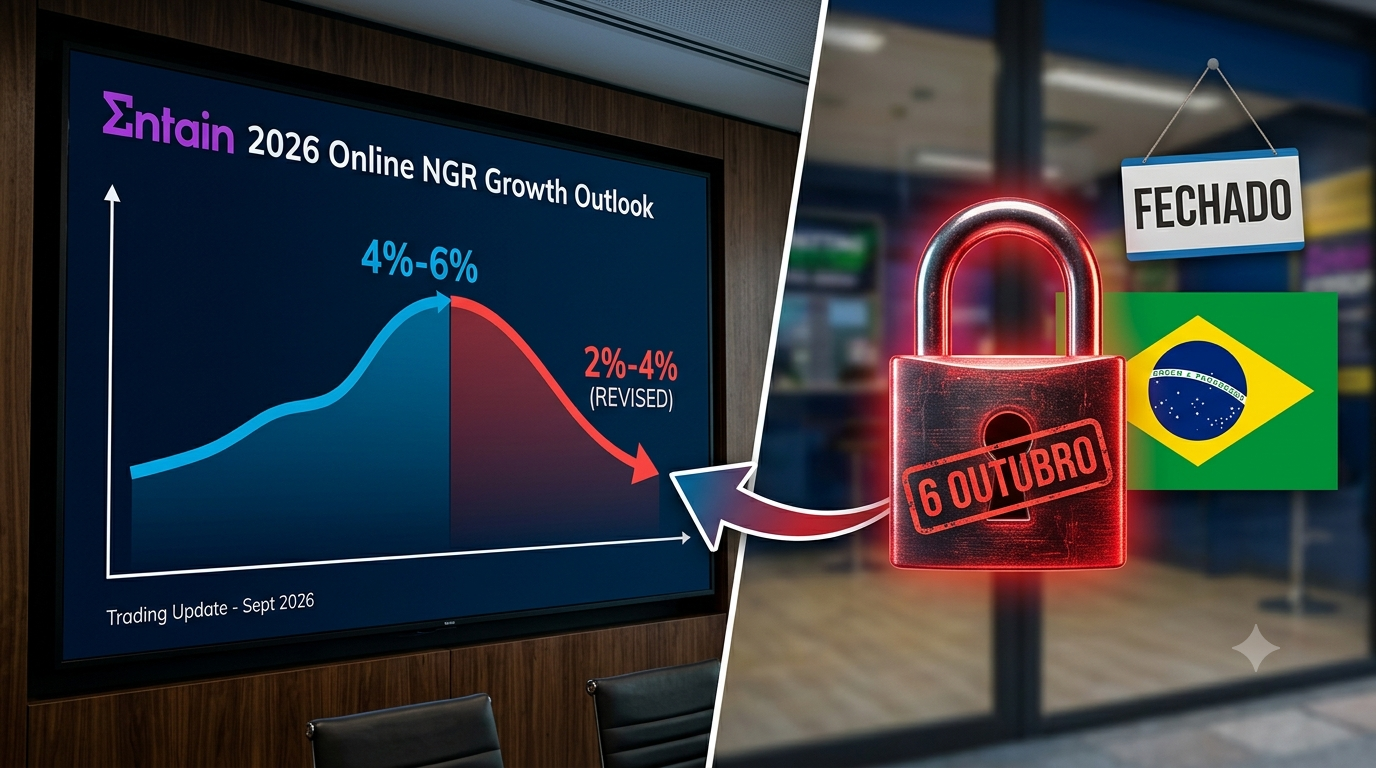
For 2026 as a whole, Entain has guided to online NGR growth of 5–7% in constant currency and Group underlying EBITDA of £910–£960 million, excluding parent company fees, alongside a medium-term target of around £500 million in annual adjusted cash flow by 2028. Those are management targets rather than achieved results, and the gap between them and the current share price is a large part of why the turnaround remains a live question for investors rather than a settled one.
BetMGM Remains Strategically Important
Entain's 50:50 US joint venture with MGM Resorts International, BetMGM, remains a significant part of the investment case, giving the group exposure to the American sports-betting and iGaming market. In the first half of 2026, BetMGM generated net revenue of $1.406 billion, up 4% year-on-year, with iGaming revenue of $964 million growing 8% and online sports revenue of $431 million up 2%. Adjusted EBITDA came in at $99 million, down from $109 million in the same period last year. For the full year, BetMGM has guided to net revenue of $2.9–$3.1 billion and adjusted EBITDA of $300–$350 million, trending toward the lower end of that range.
BetMGM's structure as a joint venture, rather than a wholly owned subsidiary, means it adds both potential upside and a degree of valuation complexity to how Entain is assessed by the market.
What the FTSE 100 Exit Means for Investors
FTSE Russell's indices underpin a very large amount of global passively managed capital — LSEG has cited roughly $20 trillion benchmarked to FTSE Russell indexes worldwide, though that figure spans the entire index family rather than the FTSE 100 alone. In practical terms, funds that track the FTSE 100 specifically will typically need to sell Entain shares around the effective date, while FTSE 250 trackers will need to buy them, generating some index-related trading activity.
How large that effect will be is harder to say with precision. It depends on the size and structure of the funds involved, and the evidence available does not support claims of dramatic forced selling. What the move does confirm is a loss of blue-chip index status and the visibility that comes with it — a symbolic and reputational shift as much as a financial one. It does not mean Entain has lost access to institutional capital: the FTSE 250 is itself a major benchmark for UK equity investors.
Commentary following the FTSE announcement has suggested Entain is leaving the FTSE 100 in comparatively decent underlying shape given its share-price decline, with some suggesting its various businesses could be worth more apart than the market currently ascribes to the group as a whole — though that remains a matter of market interpretation rather than an established fact.
What It Means for the Wider Gambling Industry
Entain's move from the FTSE 100 is a company-specific event rather than an industry verdict, but it does illustrate a pattern increasingly visible across large, listed European gambling operators: revenue growth alone is not translating automatically into rising valuations. Tighter regulation, higher taxation and compliance costs in mature regulated markets like the UK are pushing operators to prioritise cash generation, debt reduction and portfolio simplification over pure scale. Entain's CEE disposal fits that broader trend of large groups unlocking value through targeted divestments rather than continued expansion.
What Happens Next?
The near-term calendar is defined by two dates: implementation of the FTSE changes after the close on 18 September, and their effect from the start of trading on 21 September. Beyond that, the milestones to watch are largely tied to Entain's own strategic execution — completion of the Entain CEE stake sale, expected in the fourth quarter subject to regulatory approvals, and progress against the FY2026 guidance range for online NGR growth and underlying EBITDA. Whether those developments narrow the gap between Entain's operating performance and its market valuation will do more to shape the company's next chapter than its index status.
For more coverage of operator news and regulatory developments across the gambling sector, see Level.casino News.