- Breaking
UK Gambling Commission Licence Fee Increases Take Effect on October 1
The UK Gambling Commission’s revised licence fees took effect on 1 October 2026, implementing the 25% headline increase confirmed by DCMS on 30 June. The increase is unevenly distributed: DCMS says the largest operators move from around 0.1% to 0.15% of gross gambling yield, while more than 1,100 smaller operators pay less in cash terms.

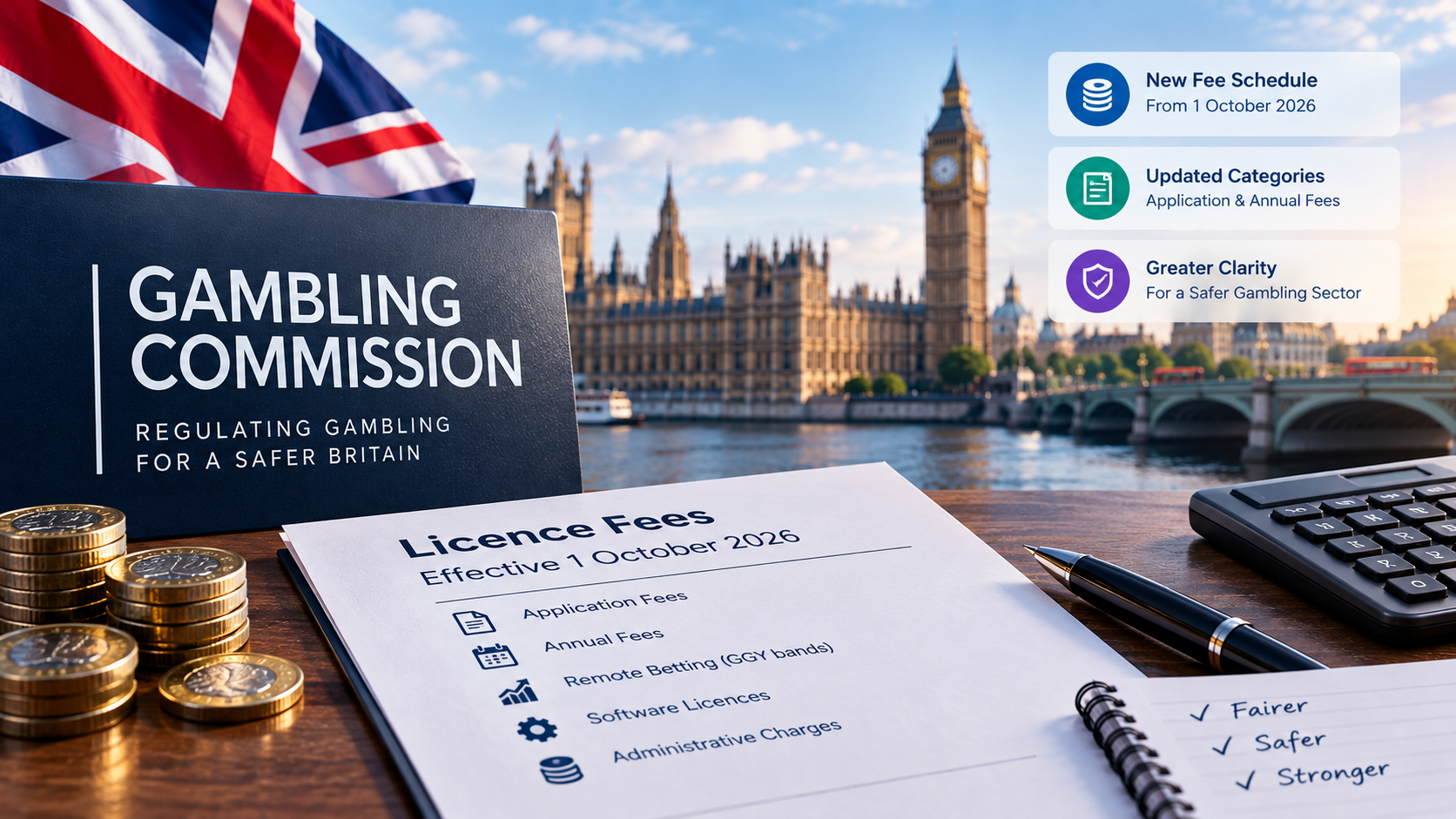
The UK Gambling Commission’s revised licence fees took effect on 1 October 2026, implementing a headline 25% increase in operating licence fees confirmed by the Department for Culture, Media and Sport (DCMS) on 30 June. DCMS said the 25% figure is a headline rate and is not distributed evenly across licence types.
How the 25% was reached

DCMS consulted between 27 January and 30 March on three options: a 30% increase, a 20% increase, and a 20% increase with a further 10% ringfenced for illegal-market and revenue-protection work. It received 47 responses, mostly from operators, suppliers and their representatives. Almost all operators opposed any increase, citing recent changes to gambling duty rates and the statutory levy. Two respondents backed the 30% option, four backed 20% and none supported the ringfenced option. DCMS settled on 25% with no ringfence.
Who pays more
DCMS said operators with annual gross gambling yield (GGY) above £100 million would see fees rise from around 0.1% of GGY to around 0.15%, while those between £10 million and £100 million would move from around 0.18% to 0.22%. More than 1,100 smaller operators below £10 million GGY would pay less in cash terms.
Society lottery fees are frozen, while external lottery managers face the full 25% increase. General betting (limited) licences move to a GGY-based fee model in place of one based on days of operation; DCMS said 44% of operators in that category would see a reduction and a further 53% an increase of £22, from £230 to £252.
Remote licence fee bands
For remote casino licences, annual fees run from £7,000 for operators with GGY below £250,000 to £1,453,949 for those above £1.6 billion, plus £272,324 for each complete additional £200 million. Application fees for the same licence range from £8,185 to £165,069.
For remote general betting (standard) real-events licences, annual fees run from £5,937 to £1,402,455 plus £272,205 for each complete additional £200 million above £1.6 billion, and application fees from £6,535 to £90,648. Remote gambling software licences carry application fees of £7,212 to £99,446 and annual fees of £7,394 to £191,880, depending on gross value of sales. First annual fees remain at 75% of the annual rate.
Personal licences and administrative charges
Personal management licence application and maintenance fees rise from £370 to £463. Personal functional licence fees rise from £185 to £231 for applications and from £145 to £181 for maintenance. Applications to vary an operating licence rise from £40 to £50 for most changes and from £160 to £200 for a change of reference to an individual. Changes of corporate control rise from £160 to £200, and single-machine permit applications from £40 to £50.
Regulator funding
DCMS said the Commission operates with annual budget deficits of about £4 million and, even with the 25% increase, must find at least £8 million of efficiency savings over five years. Separately, the Commission will use £26 million of additional HM Treasury funding over three years to scale up its work against illegal gambling. DCMS rejected phasing the increase, saying fees remain a small proportion of operators’ GGY.
Sources: This article was researched against the primary and secondary sources listed in the newsroom source records.
More from Regulation
- Brazil: Lula Re-Elected as Congress Considers Fixed-Odds Betting Ban
- UK Budget Preview: Gambling Duties and the Machine Games Duty Debate Before 28 October
- Ohio Orders 10 Prediction-Market Platforms to Stop Offering Sports Contracts
- AGCO Fines theScore.Bet C$200,000 Over Cash-Out Offers It Did Not Honour