Fake Casino Ads Exploit Tesco and Celebrity Brands to Target UK Consumers
Unauthorised gambling ads used Tesco, Barclays, Monzo and celebrity likenesses on Meta platforms — here's what's verified and what isn't.

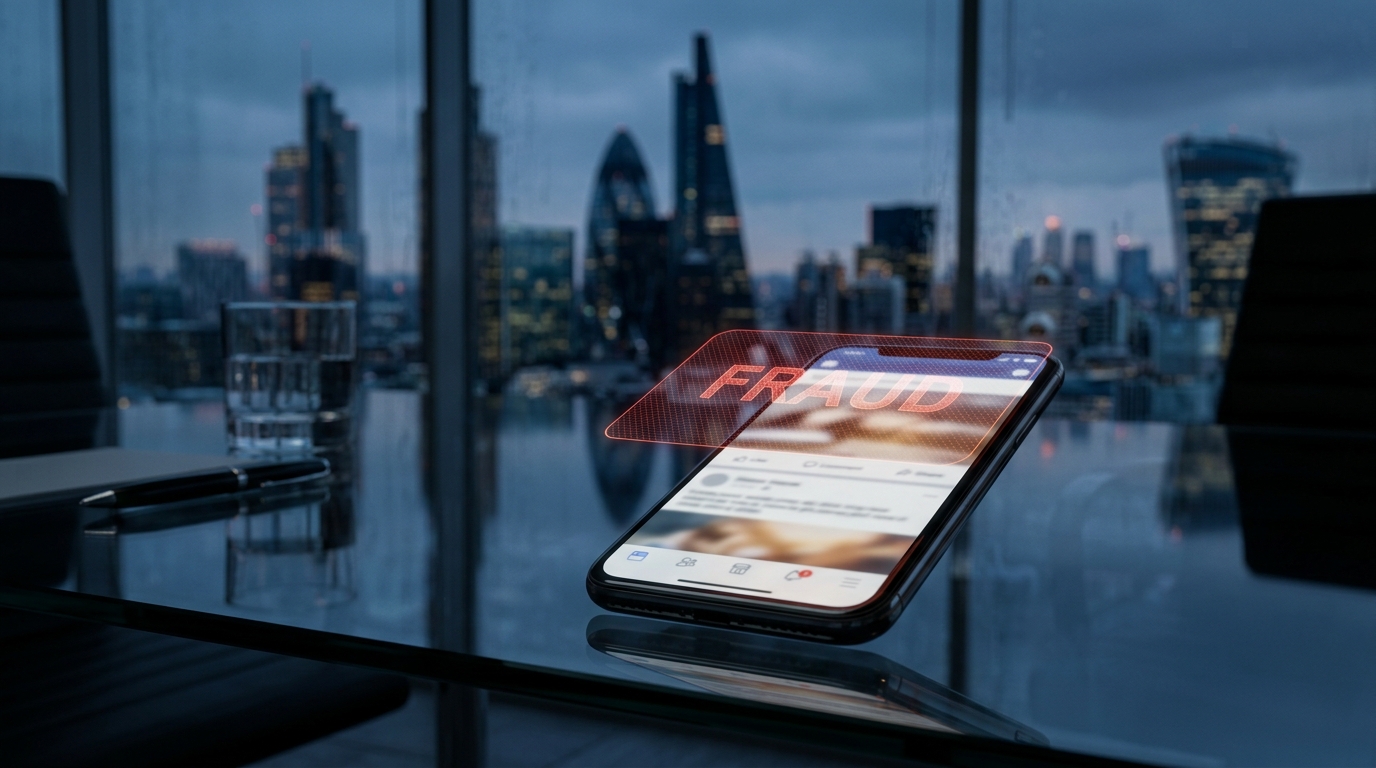
Unauthorised gambling advertisements using the names and branding of Tesco, Barclays and Monzo, alongside the likenesses of Lewis Hamilton, Tyson Fury, Erling Haaland, Jude Bellingham and Bruno Fernandes, have been circulating on Facebook and Instagram, according to a Guardian investigation published on 13 September 2026 and updated the following day. The advertisements directed UK users toward gambling websites with no apparent connection to the brands or individuals they invoked.
None of the companies or public figures named in the advertisements appear to have authorised the use of their identities. Tesco, Barclays and Monzo have all disassociated themselves from the material, and Tyson Fury has publicly denied any relationship with gambling sites using his name. The episode raises questions not only about the operators behind the campaigns, but about how platform advertising controls allowed household names to be used as an entry point into unlicensed gambling promotion.
According to the Guardian's reporting, one of the clearest examples involved a Facebook advertisement and an accompanying website presenting itself as the "official Tesco casino." The Guardian said the site used Tesco branding, invoked the retailer's reputation, and remained accessible to users in Britain at the time of the investigation, despite not holding the licence required to offer gambling services in Great Britain. Tesco referred the matter to the National Cyber Security Centre and to Report Fraud, the reporting service operated by the City of London Police, which confirmed it had received the complaint but had not, at the time of publication, referred it to a police force for investigation.
How the Fake Casino Advertising Worked

The pattern described by the Guardian relied on a combination of familiar branding, paid social-media distribution and, in some cases, AI-generated imagery. A "Barclays Slots" advertisement on Facebook reportedly used Barclays branding together with imagery involving Lewis Hamilton, and included what the Guardian described as an apparently AI-generated woman shown in sexualised imagery before she was depicted using a supposed Barclays casino game. Separate Facebook and Instagram material promoted "Monzo Slots" using Monzo's own visual identity.
Meta's Community Guidelines require accounts promoting online gambling, real-money games of skill or online lotteries to obtain prior written permission before using Meta's advertising products, and separately prohibit impersonation and misleading conduct. The Guardian's findings suggest that, in this instance, advertisements using unauthorised brand and celebrity material nonetheless reached UK audiences before being removed.
The reported mechanism is consistent with what regulators have described elsewhere: a recognisable brand or face lends an unlicensed gambling product a veneer of legitimacy that it would not otherwise have, making it more likely that a consumer will trust the site, register and deposit funds. Level.casino has not independently verified the specific domains involved and is not naming or linking to them, in line with standard practice for reporting on suspected scam operations.
Tesco, Barclays, Monzo and the Celebrity Names Used
It is important to distinguish between the companies and individuals whose identities were reportedly misused, and the unknown parties who created and paid for the advertisements. Nothing in the available reporting suggests that Tesco, Barclays or Monzo had any role in producing or approving the material bearing their names — on the contrary, all three have disassociated themselves from it. Barclays said it had no involvement with the advertisement and had taken action over the misuse of its intellectual property. Monzo described the "Monzo Slots" material as an AI-enabled scam exploiting its brand.
Among the individuals named, the Guardian reported that a Tyson Fury-branded casino existed, though it did not suggest that this particular site was the one advertised through Meta. Fury had already addressed the issue publicly: according to earlier reporting from August 2026, he posted a video to Instagram denying any relationship with gambling apps or casinos using his identity, and warning followers about sites doing so. In the case of Erling Haaland, the Guardian reported that a separate operator, Rainbet, used what it described as an apparent Haaland lookalike, rather than the footballer himself, dressed as a casino croupier in a Norway shirt. The Guardian said representatives for both Haaland and Hamilton were approached but did not report a substantive response from either. Jude Bellingham and Bruno Fernandes had previously been the subject of separate fake gambling promotions, documented in earlier reporting, including AI-generated material involving Fernandes.
None of this reporting establishes that the individuals endorsed, were paid by, or had any relationship with the gambling sites using their names or likenesses.
Were the Casinos Licensed in Great Britain?
Under Great Britain's gambling regime, an operator providing gambling facilities to consumers in Great Britain generally requires an operating licence from the UK Gambling Commission, unless a specific exemption applies. The Commission states explicitly that a gambling licence issued by another jurisdiction does not authorise an operator to provide gambling services to consumers in Great Britain — a distinction that is central to understanding this case.
The fake "Tesco casino" is the clearest example of unlicensed activity supported by the available evidence: the Guardian reported that the site was accessible from Britain during its investigation and did not hold the licence required to legally offer gambling to consumers there.
Rainbet presents a more nuanced picture and illustrates why offshore licensing should not be conflated with illegality everywhere. The Guardian reported that Rainbet, a cryptocurrency casino, claims to be licensed on the Indian Ocean island of Anjouan. Industry licensing trackers and the operator's own materials identify RBGAMING N.V. as the company behind the site, though Level.casino has not independently verified this through an official Anjouan register and treats the precise corporate detail as reported rather than regulator-confirmed. Holding an Anjouan licence does not equate to holding UK authorisation, and no evidence has been identified that Rainbet holds a UK Gambling Commission licence. Crucially, the Guardian also reported that Rainbet was not available to UK users at the time of its investigation, meaning the available evidence does not establish that Rainbet itself was providing gambling services to British consumers in this instance — only that its advertising, using an apparent Haaland lookalike, had reached them via Meta. The precise corporate operators behind the Tesco-branded site and the Tyson Fury-branded casino have not been independently established in the reporting reviewed.
Meta's Response
According to the Guardian, Meta removed the advertisements after being contacted by the newspaper as part of its investigation. Meta's position, as reported, is that advertisers themselves are responsible for complying with local gambling regulations, rather than the platform bearing that responsibility directly.
Several questions remain unanswered in the public record reviewed for this article. Meta has not disclosed the identity of the advertiser or advertisers involved, the number of accounts or advertisements affected, how much was spent on the campaigns, or how the material passed its automated and manual advertising review processes in the first place. Level.casino has not seen evidence that Meta has permanently banned any specific advertiser account in connection with this case, and this should be treated as an open question rather than a settled fact.
What UK Authorities Are Saying
The Gambling Commission told the Guardian that illegal activity linked to gambling is a threat it takes seriously, and that using a trusted brand's identity to direct people toward unlicensed casino products is a particularly cynical version of that threat. The Commission also said it expects to be better placed to act against unlicensed websites targeting UK consumers from autumn 2026, pointing to new powers arising from the Crime and Policing Act 2026. The Act received Royal Assent on 29 April 2026 and includes provisions, under Schedule 18, enabling designated enforcement bodies — including the Gambling Commission — to apply to a court for orders suspending IP addresses and domain names linked to serious crime, including unlicensed gambling.
The Commission was also clear that unauthorised use of a company's intellectual property falls outside its own regulatory remit, and said it was working with the Advertising Standards Authority on the advertising dimension of the issue. That separation of responsibilities matters: unlicensed gambling itself is a Gambling Commission matter, misleading advertising falls to the ASA and its Committee of Advertising Practice codes, intellectual property misuse is a matter for the affected brand owners, and suspected fraud sits with the police.
On enforcement, City of London Police confirmed it had received Tesco's complaint through the Report Fraud service but said, as of the time of reporting, that it had not referred the matter to a police force for investigation. No Metropolitan Police, National Crime Agency, Action Fraud or other law enforcement investigation has been documented in connection with this specific case.
Why This Matters for UK Consumers
The core consumer-protection lesson is straightforward: the presence of a familiar brand or a recognisable face in a gambling advertisement is not proof that the brand endorses, owns or operates the service being promoted. Consumers encountering such adverts should be able to separate several distinct questions — which brand appears in the advert, which company actually operates the site, where that operator is licensed, and whether that licence permits it to offer gambling to consumers in Great Britain.
Gambling with an unlicensed operator means forfeiting the consumer protections that come with UK authorisation. Gambling businesses holding the relevant remote licences are subject to the Gambling Commission's requirements on participation in the national multi-operator self-exclusion scheme, GAMSTOP; an unlicensed site is not subject to those licence conditions, so registration with GAMSTOP does not provide a guarantee of protection on an unlicensed site. Licensed operators are also bound by the CAP Code's requirements around socially responsible marketing and safeguards for children and vulnerable people, and consumers have access to complaints and dispute-resolution routes recognised by the Gambling Commission. Consumers depositing funds with an unauthorised site also carry greater risk around withdrawals and account access, though the available reporting does not document specific cases of consumer financial loss connected to this particular campaign.
The Wider Illegal-Gambling Advertising Problem
The Guardian's investigation does not describe an isolated incident. The Gambling Commission's 2026 illegal-market risk assessment identifies an increase in illegal casinos targeting the UK and links illegal gambling activity to proceeds of crime and money-laundering risk. The scale of the Commission's response is illustrated by figures published in its illegal-gambling disruption reporting: since April 2024, its Illegal Markets team has referred 447,778 URLs to Google and Bing combined, of which 287,961 had been removed, according to figures published by the Commission.
This case also sits alongside earlier, separately documented incidents involving the same underlying tactics. A June 2026 report identified a fake "Bellingham Bet" campaign on Instagram using Jude Bellingham's image, a fake app download page and an AI-generated news-style article. A July 2026 Guardian investigation documented an AI-generated video falsely depicting Bruno Fernandes endorsing an operator called QH88. An earlier, broader Guardian investigation in April 2026 identified a network of apparently illegal casinos using AI-generated identities and manipulated photographs, accessible from Britain. The Advertising Standards Authority has separately published guidance stating that AI-generated advertising remains subject to the CAP Code, and has already ruled, in a case involving Trent Alexander-Arnold, that AI-generated footballer imagery in gambling-related content can carry strong appeal to under-18s regardless of being synthetic.
What It Means for the Legitimate iGaming Industry
For licensed operators and their affiliate partners, the case underscores a compliance principle that already exists under the Gambling Commission's Licence Conditions and Codes of Practice: operators remain responsible for the conduct of third parties, including affiliates, acting on their behalf, and are expected to carry out appropriate due diligence and oversight of those relationships.
It is important, however, not to blur legitimate affiliate marketing with the conduct described in this case. A conventional gambling affiliate operating with a licensed operator publishes reviews, comparisons and editorial content, typically with a transparent relationship to the operator it promotes. The activity described by the Guardian — anonymous paid-social advertising, fabricated corporate branding, AI-generated personas and celebrity imagery used without consent — is a different category of conduct, and there is no evidence establishing that the parties behind these advertisements had any affiliate relationship with a licensed gambling business. For platforms, regulators and publishers alike, the case illustrates that advertising controls, brand-protection efforts and content moderation are being tested by increasingly sophisticated, AI-assisted campaigns that current systems did not catch before publication or, in some cases, before removal following media inquiries.
What Consumers Should Check
- Check whether an operator holds a UK Gambling Commission licence by searching the Commission's public register directly, rather than trusting claims made in an advertisement.
- Treat a familiar brand name or celebrity image in a gambling advert with caution — it does not, by itself, confirm any relationship between that brand or individual and the site being promoted.
- Navigate to gambling sites directly rather than through social-media adverts, and verify the domain independently.
- Be sceptical of unusually large bonus offers, particularly when paired with a well-known brand name.
- Look for standard UK regulatory information, including the operator's Gambling Commission licence number, and bear in mind that only gambling businesses licensed for the relevant GB activities are subject to the Commission's GAMSTOP participation requirements.
- Report suspected fake or unlicensed gambling advertisements to the platform on which they appear and, where relevant, to Action Fraud or Report Fraud.
Sources
- UK Gambling Commission — guidance on tackling illegal gambling, disruption-activity figures and the 2026 illegal-market risk assessment
- UK Government — consultation on banning unlicensed gambling sponsorship and advertising
- Crime and Policing Act 2026 — explanatory notes on Schedule 18 (IP and domain suspension powers)
- City of London Police — statement on the Report Fraud complaint, as reported by the Guardian
- Meta — Community Guidelines on gambling advertising and impersonation, and its statement on advertisement removal as reported by the Guardian
- Tesco, Barclays and Monzo — public statements regarding brand misuse, as reported by the Guardian
- The Guardian — original investigation by Rob Davies, 13 September 2026 (updated 14 September 2026), and earlier reporting on the Bellingham and Fernandes cases
- Advertising Standards Authority — guidance on AI-generated advertising and prior rulings on AI-generated celebrity content
This article reports on findings from third-party investigations and regulatory statements as of 14 September 2026. Level.casino did not independently verify the domains referenced in the original reporting and is not naming or linking to them.