Prediction Markets vs. Sports Betting: The U.S. Gambling War Enters a New Phase
The Ninth Circuit ruled Kalshi's sports contracts are gambling, not swaps — deepening a circuit split that could reach the Supreme Court.


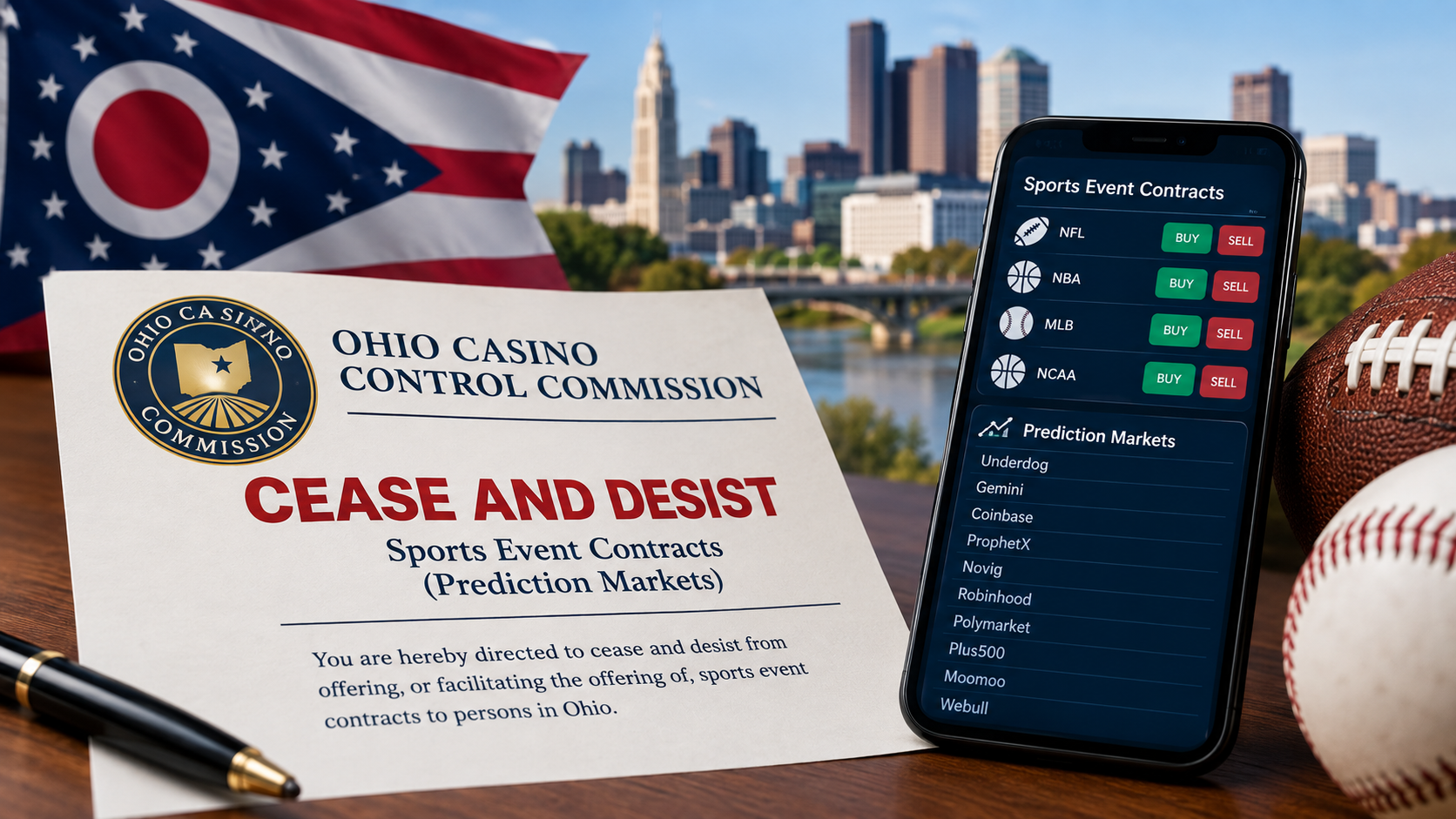
A federal appeals court has drawn a sharper line between financial derivatives and sports gambling, delivering a major setback to prediction-market operator Kalshi. On Friday, August 28, 2026, the U.S. Court of Appeals for the Ninth Circuit ruled unanimously that Nevada gaming regulators can enforce state law against Kalshi's sports-related event contracts, rejecting the company's argument that federal commodities law puts those products beyond the reach of state gambling regulation.
The decision does more than settle one company's fight with one state. It sharpens a question that has been building for two years across dozens of state courthouses: are sports-related prediction contracts financial instruments regulated exclusively by Washington, or are they, in substance, sports bets that states have always had the power to license and police? The Ninth Circuit's answer sits in direct tension with a Third Circuit ruling from April, and that disagreement between two federal appellate courts is now the central fact shaping where this fight goes next.
For an industry that has spent the past eighteen months watching prediction markets compete for the same customers and the same handle as licensed sportsbooks, without paying the same taxes or clearing the same compliance bar, Friday's ruling is the most consequential development yet.
What Just Happened in Nevada?

The case is KalshiEX LLC v. Assad, No. 25-7516, decided by a three-judge panel of the Ninth Circuit sitting in San Francisco. All three judges — Ryan D. Nelson, who wrote the opinion, Bridget S. Bade, and Kenneth K. Lee, who wrote a separate concurrence — were appointed by President Trump during his first term. The panel heard consolidated appeals from Kalshi alongside two other platforms offering similar sports contracts, Crypto.com's North American Derivatives Exchange and Robinhood Derivatives.
The dispute has moved on two tracks. In federal court, Kalshi sued Nevada seeking to enjoin enforcement of state gambling law, arguing the Commodity Exchange Act preempted it; a Nevada federal district judge initially sided with Kalshi before U.S. District Judge Andrew Gordon reversed course in April 2026 and dissolved that injunction, a decision Kalshi then appealed to the Ninth Circuit. Separately, in state court, the Nevada Gaming Control Board pursued its own civil enforcement action and obtained a temporary restraining order in March 2026 barring Kalshi from offering sports, election, and entertainment event contracts in the state — a distinct proceeding from the federal appeal, though both reflect the same underlying dispute.
Friday's ruling affirmed Judge Gordon's dissolution of the federal injunction. The panel held that the Commodity Exchange Act "likely does not preempt Nevada's gaming regulations" as applied to Kalshi's sports event contracts, because those contracts do not meet the statutory definition of a "swap." It's worth noting this is a preliminary-injunction posture: the panel assessed whether Kalshi is likely to succeed on the merits, not a final judgment resolving the underlying case. Judge Nelson wrote plainly for the panel:
"The substance of the sports event contracts offered on Kalshi's DCM is sports gambling, regardless of whether Kalshi calls them swaps."
The practical effect is that Nevada regulators are now free to enforce state gambling laws against Kalshi's sports contracts while the case proceeds, rather than being blocked from doing so by an injunction.
The ruling is narrower than a blanket ban. The panel remanded the separate question of Kalshi's election-related contracts back to the district court, leaving that issue for a future ruling rather than deciding it here. The decision applies specifically to sports contracts; it is now controlling precedent within the Ninth Circuit — which covers Nevada, California, Arizona, Washington, Oregon, Alaska, Hawaii, Idaho, and Montana, plus Guam and the Northern Mariana Islands — unless overturned on rehearing or by the Supreme Court, rather than an order that itself directly regulates every operator in those states.
Why Kalshi Says Its Sports Contracts Are Different From Bets
Kalshi's core argument rests on its status as a Designated Contract Market (DCM), a category of exchange registered with and overseen by the Commodity Futures Trading Commission (CFTC) under the Commodity Exchange Act. On a DCM, traders buy and sell "event contracts" — binary "yes" or "no" positions tied to whether a defined event will occur. Kalshi's position is that these contracts qualify as swaps under federal law, which would place them within the CFTC's exclusive jurisdiction and, Kalshi argues, preempt conflicting state gambling regulation.
Kalshi listed its sports contracts through a process called self-certification, in which a registered exchange certifies to the CFTC that a new product complies with the Commodity Exchange Act, rather than seeking the agency's affirmative pre-approval. The CFTC has not formally approved Kalshi's sports contracts; it has simply not moved to block them through self-certification review. Kalshi has argued that because it operates under a federally mandated framework, it faces "impossibility preemption" — that complying simultaneously with CFTC rules and a patchwork of state gaming licensing regimes is not workable, and federal law should control.
This is a genuine legal theory with real precedent behind it in other derivatives contexts, not a bad-faith dodge. Kalshi spokesperson Dani Lever said after Friday's ruling that the company will "seek further review." Lever added:
"Despite the Ninth Circuit's opinion, we still believe the CFTC regulations as written do not prohibit sports contracts, and in any event, the CFTC is working to clarify those regulations."
Why Nevada Says This Is Sports Betting
Nevada's position starts from a different premise: that labeling a product a "swap" does not change what it actually is to the person placing money on it. Nevada's gaming statutes require anyone offering sports wagering in the state to hold a license issued by the Nevada Gaming Control Board and Nevada Gaming Commission, subject to background checks, responsible-gambling requirements, and ongoing compliance oversight. Kalshi holds no such license.
The state's core argument is that the economic substance of the transaction matters more than its legal packaging. A Kalshi contract asking whether a specific team will win a game lets a user take a position that functions, from the customer's perspective, similarly to a moneyline or point-spread bet at a licensed sportsbook — win the position, get paid; lose it, forfeit the stake. NGCB Chairman Mike Dreitzer reacted to the ruling by saying:
"This completely vindicates what we have been saying all along. This is sports betting and needs to be properly regulated by the state."
In its own filings announcing the state-court TRO, the NGCB specifically flagged that Kalshi had repeatedly described its operations as legal across all 50 states, arguing that framing was itself misleading given the state-by-state legal uncertainty around sports contracts specifically. Nevada also points to the Commodity Exchange Act's history, arguing Congress never intended the 2010 Dodd-Frank reforms to displace a form of state authority — gambling regulation — that predates federal derivatives law by more than a century.
The CFTC Question: Financial Market or Gambling Market?
The CFTC regulates U.S. derivatives markets: futures, options, and swaps traded on exchanges like the Chicago Mercantile Exchange, and now, prediction-market platforms like Kalshi. Its authority comes from the Commodity Exchange Act, which grants it exclusive jurisdiction over swaps traded on registered exchanges — a jurisdictional grant Kalshi leans on heavily.
But the CFTC's own regulations complicate Kalshi's position. 17 C.F.R. § 40.11(a) prohibits a registered entity from listing any contract that "involves, relates to, or references terrorism, assassination, war, gaming, or an activity that is unlawful under any State or Federal law." The rule has existed for years, and the Ninth Circuit panel leaned on it directly, noting that until the CFTC formally amends the provision, it bars gaming-related contracts from being listed on a DCM. Judge Lee's concurrence took a slightly narrower view, suggesting the statute "does not seem to categorically bar all gaming contracts" and that some sports-adjacent products could theoretically meet the statutory definition of a swap if structured differently.
The CFTC proposed amendments to Section 40.11 back in 2024 specifically to define which "gaming" contracts are barred, but formally withdrew that rulemaking effort in February 2026 without finalizing it, leaving the underlying rule's scope genuinely contested. That regulatory gap — a rule on the books that arguably prohibits sports contracts, paired with an agency that has neither enforced it against Kalshi nor finished clarifying it — is part of what let Kalshi's self-certification go unchallenged at the federal level while state regulators moved in.
Two Courts, Two Answers: The Circuit Split
Nevada's win sits in direct tension with a decision the Third Circuit issued less than five months earlier. In KalshiEX LLC v. Flaherty, No. 25-1922, a divided panel ruled 2-1 on April 6, 2026 — also at the preliminary-injunction stage — that Kalshi's sports event contracts likely do qualify as swaps and that the Commodity Exchange Act preempts New Jersey's gambling laws through both field and conflict preemption. Writing for the majority, Judge Porter found that because Kalshi's contracts trade on a CFTC-licensed DCM and turn on outcomes with economic consequences, they fit the statutory definition of a swap. Judge Roth dissented, arguing the majority failed to apply the traditional presumption against preempting state authority over an area — gambling — that states have regulated for generations.
Both rulings, then, are "likelihood of success" assessments in ongoing litigation rather than final merits judgments — but they reach opposite conclusions on the same statutory question applied to the same company's product, which is exactly the kind of conflict the Supreme Court looks for when deciding whether to grant certiorari. New Jersey has until September 3, 2026 to file its own petition asking the Supreme Court to review the Third Circuit's Flaherty decision — a deadline specific to New Jersey's case, not one that applies to Kalshi's Nevada litigation directly, though the Ninth Circuit's contrary ruling strengthens the argument for review. It is not yet known whether the Supreme Court will agree to hear any case arising from this dispute; a petition being filed and a petition being granted are different things, and no cert petition has been granted as of this writing.
The Major Questions Doctrine and State Gambling Powers
The Ninth Circuit's opinion invoked the major questions doctrine, a principle courts use when an agency claims sweeping new authority based on ambiguous statutory language. The panel reasoned that reading Dodd-Frank's amendments to the Commodity Exchange Act as silently transferring the states' traditional police power over gambling to the CFTC would raise exactly that kind of problem — a decision of major economic and political significance that Congress did not clearly authorize.
Framed simply: courts are reluctant to assume Congress quietly stripped states of long-held authority through technical statutory language, especially when that authority — regulating gambling — sits close to the core of state police powers. Nelson's opinion put it directly:
"Congress did not take a wrecking ball to all sports gambling regulations built up over decades by federal, state, and tribal governments."
Arizona Attorney General Kris Mayes, whose state has its own pending fight with Kalshi, echoed the point after the ruling:
"Financial reform legislation was never intended to strip states of their traditional police power over gambling, and I'm glad the court said so clearly."
What the Ruling Means for DraftKings, FanDuel and Other Sportsbooks
Licensed sportsbook operators have watched prediction markets offer sports-adjacent products without paying state licensing fees, gross gaming revenue taxes, or the compliance costs tied to state-regulated wagering. Shares of DraftKings (DKNG) and Flutter Entertainment (FLUT) — FanDuel's parent company — rose more than 5% in the immediate aftermath of Friday's ruling, according to Sportico, a signal that markets read the decision as protective of the licensed sportsbook model. FanDuel itself is not separately publicly traded.
The American Gaming Association, the trade group representing licensed casino and sportsbook operators, was unambiguous in its reaction. CEO Bill Miller said:
"This ruling is a significant win for consumer protections and taxpayers. It is a big loss for Kalshi and other backdoor sports gambling operations who defy state laws."
The AGA has previously estimated that prediction markets diverted several hundred million dollars in potential state sports betting tax revenue since sports event contracts first appeared in early 2025. This article does not attribute a position on Friday's ruling to any individual operator — DraftKings, Flutter/FanDuel, BetMGM, Caesars, Fanatics, or bet365 — beyond the confirmed stock-price reaction, since none had issued a formal public statement on the decision as of publication.
Why This Matters Beyond Sports Betting
The direct effect on online casino regulation is limited — this case is about sports event contracts specifically, not slots, table games, or prediction markets as a category. Kalshi's election and entertainment contracts remain governed by separate, still-unresolved litigation. But the underlying principle reaches further. The ruling reinforces that state gaming control boards retain authority to police wagering products regardless of how they are financially structured, which matters for any operator experimenting with financialized gambling products, crypto-settled wagers, or sweepstakes-style contests that blur the line between a game of chance and a financial instrument.
It also touches B2B suppliers and payment providers working with prediction-market platforms, who now face a more fragmented compliance map: treated one way in some circuits under some legal theories, another way elsewhere, with no nationwide resolution likely before further appellate or Supreme Court action. Crypto.com and Robinhood, both named alongside Kalshi in the consolidated Ninth Circuit appeal, face the same exposure through their own event-contract offerings.
Affiliate Compliance: A New Risk Area
For Level.casino's audience, this is the section that matters most operationally. Affiliates that promote prediction-market products alongside licensed sportsbooks need to treat sports-event contracts specifically — as distinct from prediction markets generally, which also cover politics, weather, and entertainment — as a higher-scrutiny category, not something interchangeable with licensed sports wagering.
A licensed sportsbook operating under a state gaming license carries a clear, verifiable regulatory status in that state. Kalshi's legal status for sports contracts now varies by federal circuit and by ongoing litigation, and that status can change with the next ruling. This does not mean every affiliate promoting a prediction market is automatically violating the law — legality depends on jurisdiction, product type, and the current state of litigation in that circuit. It does mean affiliates should:
- Avoid describing any prediction-market product as "legal everywhere" or "legal in all 50 states."
- Clearly distinguish sports-event contracts from other prediction-market products (elections, weather, entertainment) and from licensed sportsbooks in promotional copy.
- Identify the current regulatory status of a product in the specific states being targeted, and update that language as litigation develops.
- Avoid directing users toward sports-event contracts in states pursuing active enforcement, such as Nevada.
- Review affiliate licensing and advertising requirements before publishing commercial links to any prediction-market operator.
- Seek jurisdiction-specific legal or compliance advice rather than relying on a platform's own marketing claims.
Affiliates who continue promoting sports-event contracts as functionally identical to licensed sportsbooks, without regard to the state-by-state legal picture, risk complications with their existing vendor relationships with licensed operators and casinos.
What Does This Mean for U.S. Consumers?
For bettors and traders, the practical takeaway is that a product being available online does not mean it is legal everywhere it can be accessed — particularly for sports-event contracts, as opposed to Kalshi's other product lines. According to Nevada regulators' own filings, Kalshi has repeatedly described its sports operations as legal nationwide; the current litigation shows that framing is contested at best. Consumers in Nevada, and potentially in other states pursuing similar enforcement, may find sports contracts unavailable or subject to sudden geofencing as litigation develops.
There is also a meaningful difference in consumer protection frameworks. Licensed sportsbooks operate under state-mandated responsible-gambling programs, self-exclusion systems, and fund-segregation requirements. Prediction markets structured as financial exchanges are not built around the same state consumer-protection apparatus, even where they offer comparable functionality to the end user. Understanding which regulatory framework, if any, governs the specific product being used is a reasonable step for any consumer engaging with these platforms.
Kalshi vs. Polymarket: Two Very Different Models
Kalshi and Polymarket are often mentioned together as "prediction markets," but their structures differ substantially. Kalshi is U.S.-based, uses fiat currency, and operates as a CFTC-registered Designated Contract Market — which is precisely why it is fighting these battles in U.S. federal courts rather than operating outside the regulatory perimeter entirely. Polymarket, by contrast, is built on blockchain infrastructure, settles in cryptocurrency such as USDC, and operates offshore with U.S. access officially restricted. The two companies are not legally interchangeable, and a ruling affecting Kalshi's CFTC-based legal theory does not automatically extend to Polymarket's offshore structure, which faces a different set of legal questions around U.S. market access entirely.
What Happens Next?
Several developments are effectively confirmed to occur in the near term. New Jersey's deadline to petition the Supreme Court for review of the Third Circuit's Flaherty decision falls on September 3, 2026. The Nevada district court will resume proceedings on the narrower question of Kalshi's election contracts, which the Ninth Circuit remanded rather than resolved. Other states pursuing parallel litigation against Kalshi — including ongoing cases in Arizona, Maryland, Massachusetts, Michigan, New York, and elsewhere — are likely to cite the Ninth Circuit's reasoning in their own proceedings.
Other outcomes remain genuinely uncertain rather than confirmed. Kalshi may seek en banc rehearing before the full Ninth Circuit, though it is not yet known whether it will do so or whether such a request would succeed. Whether the Supreme Court grants certiorari in the underlying dispute — and, if it does, how it would resolve the circuit split — cannot be predicted. Prediction-market bettors on Polymarket pushed the odds of Supreme Court review above 60% following Friday's ruling, but that reflects market sentiment, not a legal certainty. The CFTC could also move to finalize new rulemaking clarifying Section 40.11's scope, which would materially affect how this dispute plays out regardless of what the courts ultimately decide.
The Bigger Question: Can Sports Betting Become a Financial Product?
Zoomed out, this dispute is a proxy for a larger structural question the U.S. regulatory system has not yet resolved: where does a financial derivative end and a wager begin? Prediction markets now let consumers take positions on sports outcomes, elections, weather events, economic indicators, and entertainment results, all through the same binary "yes/no" contract structure that traditional derivatives use for genuine hedging purposes.
At the same time, licensed sportsbooks have moved toward derivative-like features of their own — cash-out options, live in-play pricing, and micro-betting markets that resemble intraday trading more than a single fixed-odds wager. Retail investing platforms have separately drawn criticism for gamifying options trading in ways that mirror sports-betting psychology. Courts, state regulators, and federal agencies are all being asked to draw a boundary between two things that increasingly look alike from the user's chair, even when they are built on very different legal foundations. Friday's ruling is one court's answer, at a preliminary stage of litigation. It is not the last word.
Frequently Asked Questions
Is Kalshi a sportsbook?
No. Kalshi is registered with the CFTC as a Designated Contract Market and describes itself as a financial exchange. The Ninth Circuit found that its sports contracts function like sports bets in substance, but Kalshi does not hold sportsbook licenses in the states where it has faced enforcement, including Nevada.
Is Kalshi legal in Nevada?
Kalshi's sports event contracts are not currently permitted in Nevada. The Ninth Circuit affirmed a lower court ruling allowing the Nevada Gaming Control Board to enforce state gambling laws against those contracts while litigation continues. Kalshi's election contracts remain a separate, unresolved question sent back to the district court.
Are prediction markets legal in the United States?
It depends on the state, the specific product, and which federal circuit governs. The Third Circuit found Kalshi's sports contracts likely protected by federal preemption in New Jersey; the Ninth Circuit found the opposite for Nevada, at a similar preliminary stage. There is currently no single nationwide answer, and the picture differs for sports contracts versus Kalshi's election or entertainment products.
What is the difference between Kalshi and a sportsbook?
A licensed sportsbook operates under a state gaming license with associated consumer protections, taxes, and compliance obligations. Kalshi operates as a CFTC-regulated exchange offering event contracts, a structure it argues is legally distinct from sports wagering, though courts disagree on whether that distinction holds for sports-related products.
Why is the CFTC involved in sports prediction markets?
The CFTC regulates derivatives exchanges under the Commodity Exchange Act. Kalshi listed its sports contracts through self-certification with the CFTC rather than seeking the agency's affirmative approval, and courts are now examining whether those contracts fall under the CFTC's jurisdiction or state gambling law.
Could the Supreme Court hear the Kalshi dispute?
It's possible but not confirmed. New Jersey has until September 3, 2026 to petition the Supreme Court to review the Third Circuit's ruling in its own case. The Ninth Circuit's contradictory decision increases the odds the Court takes up the underlying question, but no petition has been granted as of this writing.
What does the Ninth Circuit ruling mean for sports betting?
It affirms that Nevada, and by controlling precedent the rest of the Ninth Circuit, retains authority to treat sports-related event contracts as gambling subject to state regulation, reinforcing the position of licensed sportsbooks that compete with prediction markets for the same customers.
Conclusion
The fight over prediction markets vs. sports betting is no longer a dispute confined to one company or one state. It is a live disagreement between two federal appellate courts over where the boundary sits between a federally regulated financial derivative and a state-regulated sports bet — and that disagreement now has a concrete deadline attached to it, with New Jersey's Supreme Court petition due September 3.
Nothing about Friday's ruling settles the underlying question nationally, and both the Ninth and Third Circuit decisions remain assessments made at the preliminary-injunction stage rather than final judgments. Kalshi's election markets, the Third Circuit's contrary reasoning, and the CFTC's unfinished rulemaking all remain open. What happens over the next several months — whether the Supreme Court takes up the question, whether the CFTC moves to clarify its own rules, and how other states respond — will do more to define this market's future than Friday's decision did on its own.